A Paper Chain in the Rain

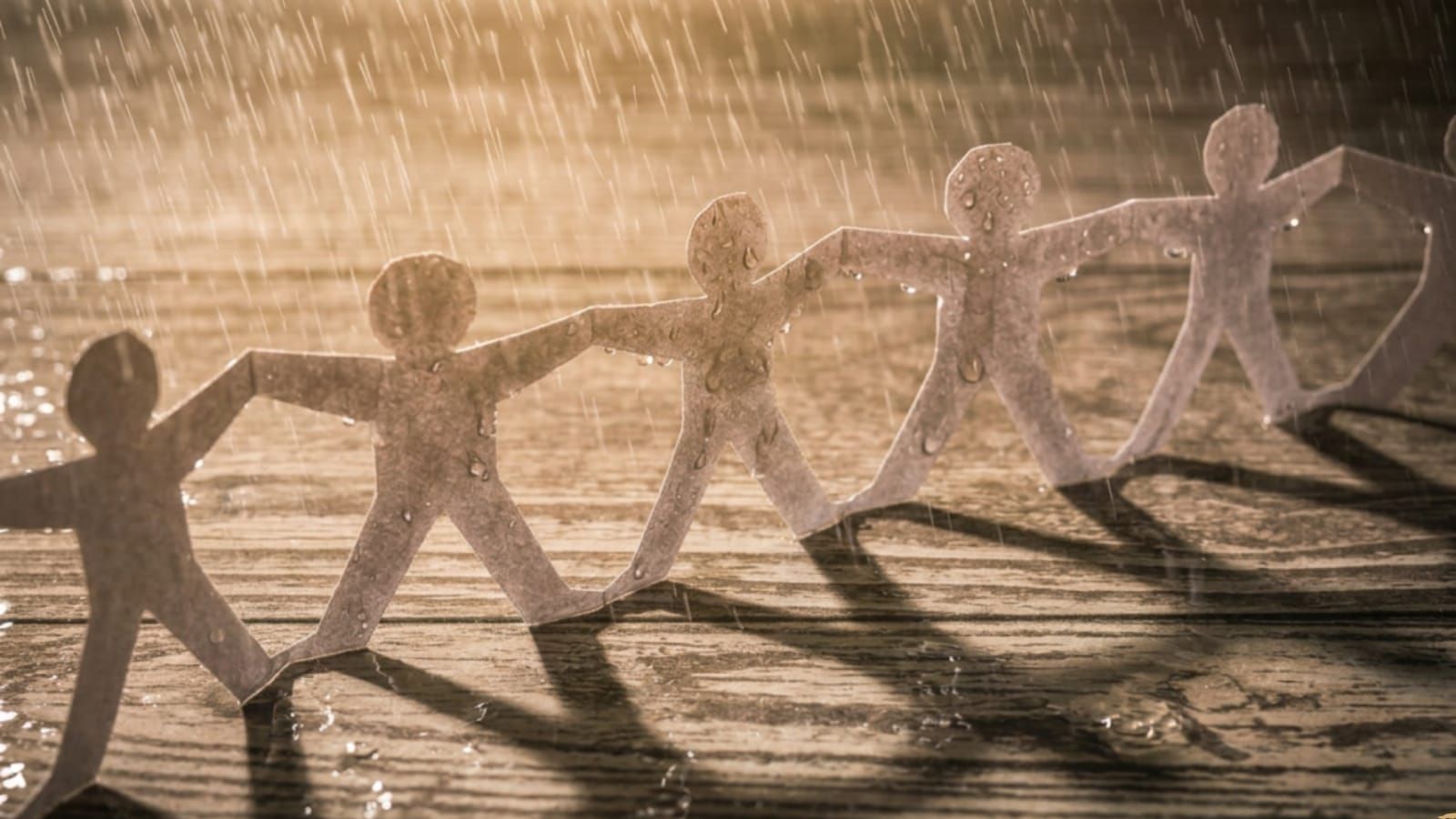
There is a particular kind of distance that has nothing to do with geography.
Sat at my desk, thousands of kilometres from an endangered rainforest, I'm tasked with something that seems deceptively straightforward at the outset. A piece of effective conservation communication is realistically about building one small link at a time, creating messaging that transcends distance and inherent obstacles, to ideally fulfil a very distinct purpose.
Within the chain, and along the path to achieving that goal, is sifting through the cultural and (multiple) lingual veils of a place I've never physically been to, in pursuit of the right contextual perspective and, the part I care deeply about, communication through creativity.
In practice that can mean chunks of time inside Canva, foraging through libraries of assets the way I might forage through a forest itself, hoping to stumble on the one graphical element that already held the seed of the meaning I needed.
Often in my (myopic) case, nothing I find quite fits the brief, so I'd start from base elements with a raw, ground-up approach, sculpting away until it began to resemble what I meant. Either way, I'd drag a symbol into place, look at it, and ask: does this mean what I think it means, to someone who has never read my brief, in a language I don't speak? Most of the time the answer was no, so I'd try again. A leaf became too generic. A raised fist perhaps read as protest rather than partnership. Trial and error wasn't a phase before the real work; it was the work; each failed version was still a link in the chain, even the ones that never left the canvas.
That's the moment the abstraction stops. That's the moment the paper chain holds, because the whole point of the chain was never the chain itself, but the moment a local community understood the value and importance of the messaging it was holding.
I spent years working in the voluntary carbon market, mostly on the communications side: the messaging, the platforms, the materials that are supposed to translate a conservation project into something a reader, a donor, or a local community member can actually understand. One of the pieces I'm proudest of was a poster. Not a campaign, not a strategy deck. A poster, meant to hang in community spaces near a forest conservation project, explaining the three pillars the whole thing rested on: Climate, Community, Biodiversity.
The brief sounded simple until I tried to do it properly. The region the poster was destined for wasn't one language or one culture. It was many, layered across the same landscape, each with its own symbols, associations, and ways of reading an image. Words were a liability. A phrase that felt precise in English could arrive garbled, or worse, condescending, once translated three times over. So the pillars had to live in symbols instead: icons for climate, for community, for biodiversity, built to carry meaning on their own, without leaning on a caption to rescue them.
That's not a small design problem. That's asking a picture to do what language usually does, and to do it without stepping on culture, without flattening the very people it was meant to serve.
I want to be careful here, because this isn't a story about one person's cleverness. It's a story about a paper chain: a long, looping line of collaborators (designers, translators, community liaisons, field staff, the people who eventually held the poster up on a wall) where each one is a link, each one necessary, each one capable of letting the whole thing come apart if the rain fell wrong. Some days it did. A word didn't survive translation. An icon read differently than intended. A layout looked fine on a screen in Europe and strange on a wall in the tropics.
But some days, the chain held. And on those days, I'd get a photo of the poster on a wall, in use, doing exactly what it was built to do. And something in me would settle. Not pride, exactly. More like relief. Confirmation that the chain, for one more day, hadn't come apart in the rain.
Rain is a strange thing to build a metaphor around, because it refuses to mean only one thing. It is the reason a forest exists at all, the water that moves through roots and leaves and eventually through the very carbon a project like this is trying to protect. And it is also, increasingly, a weapon. Climate change hasn't just made rain more common or less common. It has made rain unpredictable, and in its most extreme form, capable of flooding the same ecosystem it should nourish. The people who feel that most are rarely the ones sitting at a desk far away. They are the local communities living in and around a conservation project, the very people the three pillars, Climate, Community, Biodiversity, exist to protect.
So when I say the paper chain gets rained on, I mean it two ways.
There is rain that nourishes it. A translator who catches a phrase before it goes wrong. A field colleague who sends back a photo, unprompted, because they know it will mean something to me. A community member who takes the poster and explains it better than I ever could have written it myself, filling in the meaning I could only gesture at from a distance. That kind of rain doesn't wash the chain away. It's what lets it hold together at all.
And then there is rain that floods it. Funding delayed by a cycle no one on the ground controls. A translation stuck in review while a printing deadline passes. A message that has to go through four approvals before it reaches the person it was written for, and by the time it arrives, the moment it was meant for has already passed. None of this is anyone's fault, exactly. It's just how the chain is built. But it means that the very system meant to protect people from climate change can, on its worst days, move slower than the climate itself.
That's the irony I keep coming back to. The bureaucracy, the distance, the layers of approval exist for good reasons: accountability, accuracy, consent. But they are also, structurally, a kind of weather system of their own. They can flood a project as surely as a monsoon can. The chain doesn't fail because anyone stopped caring. It fails, sometimes, because the chain itself was never built to move at the speed the problem demands.
The views expressed in this article are my own and do not necessarily reflect the views, positions, or policies of any organization I have been affiliated with, past or present.